COLLECTIONS > ROOTED BUT NOT STILL
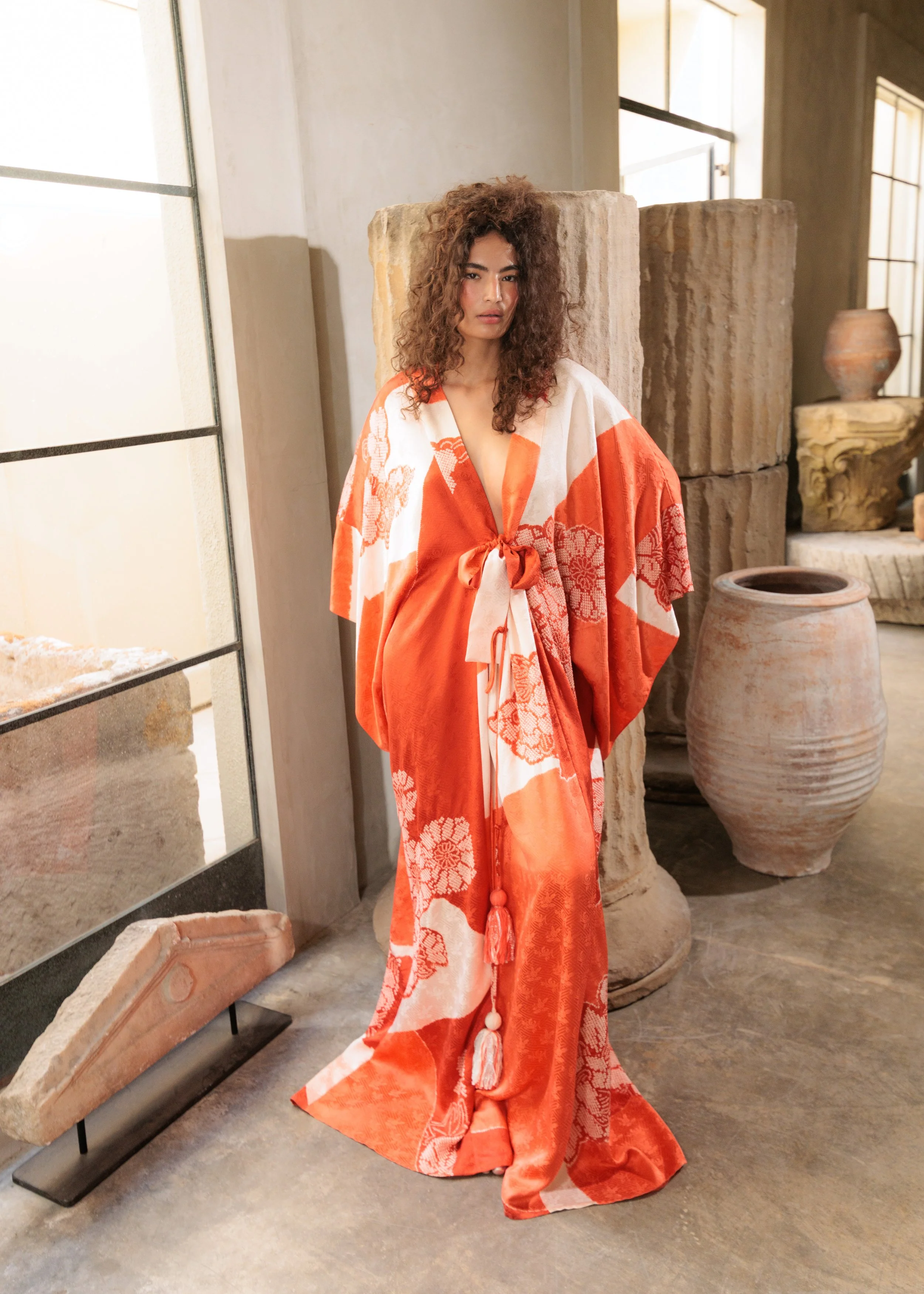
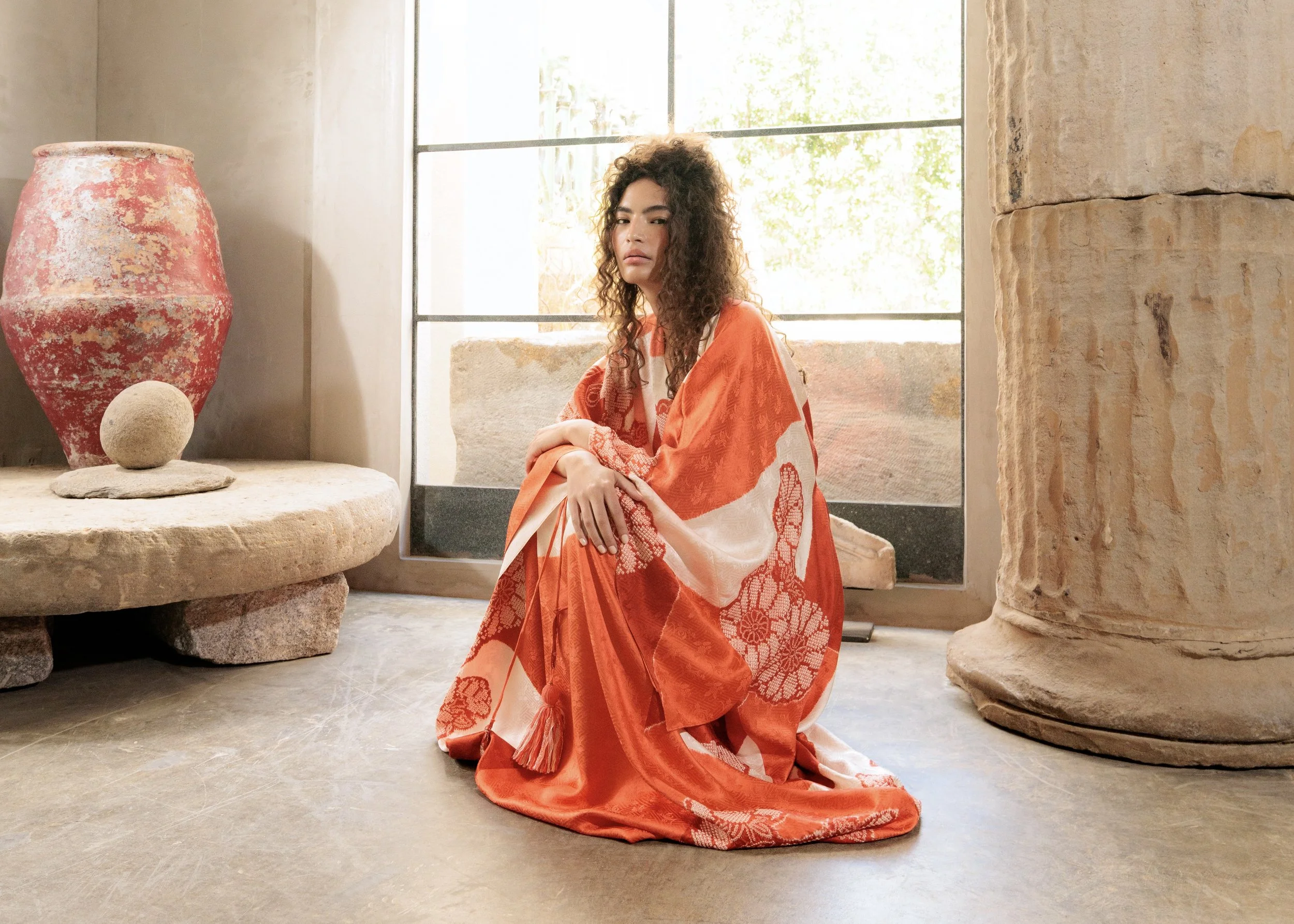
PERSEPOLIS SHIBORI KARFTAN
Shibori is a traditional Japanese family of shaped-resist dyeing techniques in which fabric is folded, twisted, bound, stitched or clamped before being immersed in dye. The manipulation of the silk creates areas that resist the dye, resulting in patterns distinguished by their depth, irregularity and softly defined edges. Each piece carries the subtle variations that make hand-worked textiles uniquely individual.
The floral motif has a distinctive twelve-petalled form, alike to the rosettes found in Achaemenid art at Persepolis and documented among the carved architectural ornament of the ancient site. This connection lends the design an evocative Persian dimension. The stylised bloom, however, is more likely to be an interpretation of an open Gerbera, whose form bears a striking resemblance to the ancient rosette. In Hanakotoba the Gerbera represents optimism hope and moving forward, lending the floral composition an uplifting contemporary interpretation. Whereas the Persepolis flower symbolises cosmic order amongst peace, renewal, and divine favor.
The Kaftan features a deep V neck in front with a bow and draw string that may be worn and adjusted to size.
DETAILS
made in los angeles
rinzu silk
reconstructed kimono bolt
two tassels at drawstring end
1/1
price upon request